Spa and Wellness Outdoor Spaces: Calm, Privacy, and Material Selection
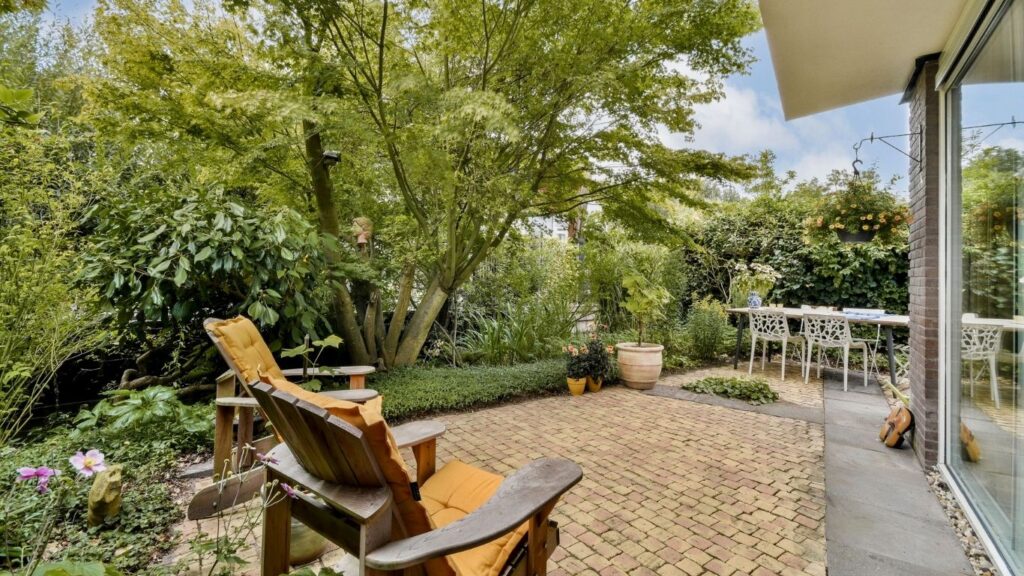
A backyard patio is built for conversation and activity. A spa or wellness space is built for the opposite. The goal isn’t to fill the space with things to do, it’s to strip away everything that competes for attention until what’s left is quiet. That changes almost every design decision, starting with the one most homeowners underestimate: privacy.
This post is part of a series covering outdoor environments by type at The Modern Garden Company, where each space gets its own design guide.
Privacy is the starting point
You can’t relax in a space where you feel watched. That’s the first problem a wellness area has to solve, and it usually has to solve it without turning the yard into a walled compound.
Evergreen hedging does this well because it screens year-round and softens over time as it fills in. Bamboo works fast, often reaching usable height within a season, and it moves with the wind in a way that adds to the calm rather than distracting from it. Slatted timber screens and low stone walls give more immediate structure and pair well with plantings once they’re in. Pergola curtains are the most flexible option: sheer or heavier fabric panels that can be drawn for full privacy during use and opened the rest of the time.
The best results usually layer two or three of these rather than relying on one tall barrier. A stone wall with bamboo planted just behind it reads as intentional. A single ten-foot fence around the whole space usually just reads as a fence.
Materials that feel as calm as they look
In a wellness space, the surfaces do more work than they do anywhere else in a yard. You’re barefoot, you’re close to the ground, and you’re often touching things: a stone bench, a wooden deck, the edge of a plunge pool. Cold, glossy, or overly polished materials undercut the mood no matter how good they look in a photo.
Natural stone with a honed or flamed finish, unfinished wood, bamboo decking, and smooth troweled concrete all share a quality that matters here: warmth underfoot and a texture that reads as natural rather than manufactured. High-gloss porcelain and polished stone tend to work against this. They photograph well but feel closer to a hotel lobby than a place meant for rest.
Water as an acoustic tool
Water earns its place in a wellness space by doing a job most other design elements can’t: masking noise. A small fountain or a slow-moving water feature covers traffic sounds, neighboring conversations, and the general background hum of a residential area far better than fencing alone.
Still water, like a shallow reflecting pool or a plunge pool with a quiet filtration system, adds a visual calm that moving water doesn’t. The choice between still and moving water usually comes down to what the space needs more: something to look at, or something to listen past.
Lighting that doesn’t undo the work
Bright, cool-toned lighting is the fastest way to unravel an otherwise well-designed spa space. Warm light in the 2700K to 3000K range is what spa and hospitality designers reach for consistently, and for good reason: it slows things down visually instead of reading as functional, and it doesn’t compete with the rest of the design. Path lighting, low fixtures near seating, and the occasional uplight on a tree or wall are usually enough. Overhead and bright is the combination to avoid.
Shade without losing the calm
In Arizona, shade in a wellness space carries an extra requirement. It has to manage heat without adding structure that breaks the mood. A dense pergola with climbing vines does both: it blocks direct sun and reads as part of the garden rather than hardware bolted onto it. Mature shade trees placed on the west side of the space work the same way, and they soften the hard edges that stone and timber screening can otherwise create. The spaces that get this right don’t feel shaded so much as sheltered, which is the difference between a functional patio and a place someone actually wants to sit still in.