Designing Outdoor Spaces for the Arizona Climate: Heat, Sun, and Shade Considerations
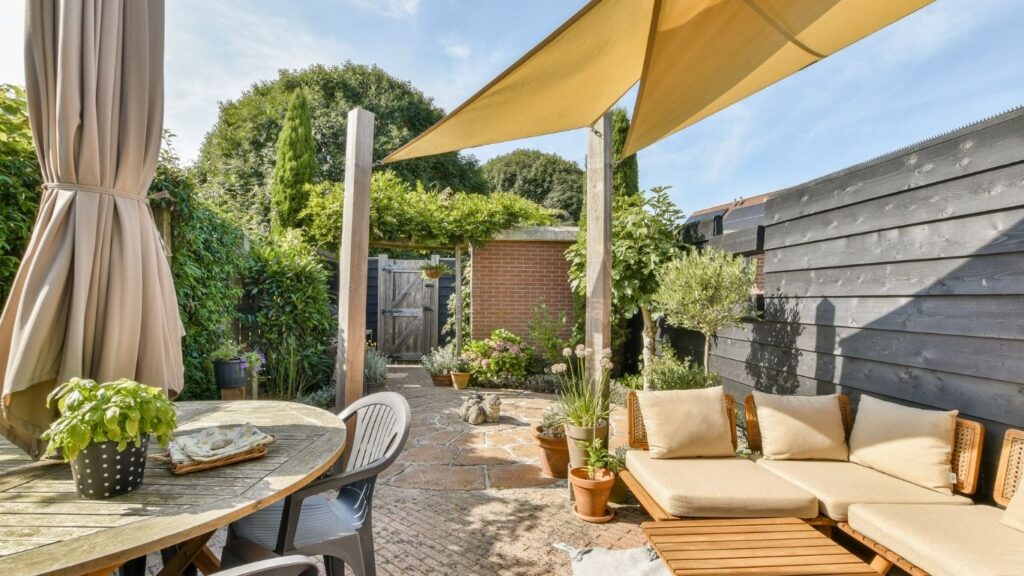
In most of the country, shade is something you add to a patio after the important decisions are made. In Arizona, it is the first decision. When daytime highs sit above 110 degrees for weeks at a stretch, an unshaded patio is not a patio. It is an empty slab that nobody touches between May and September. A properly shaded area can feel up to 15 degrees cooler than an exposed one, and that difference decides whether a space gets used at all.
This post covers the design choices that follow from that reality: shade structures, surface materials, furniture, and how to combine them. It is part of a larger series on outdoor environments at The Modern Garden Company, where each space type gets its own guide.
Choosing a shade structure
The main options fall along a spectrum from open to fully covered. A traditional pergola with spaced slats gives filtered light and an airy feel, but it will not protect anyone from a 2 p.m. sun in July. A solid patio cover or ramada blocks the sun completely, and insulated roof panels keep the space under it noticeably cooler. Aluminum systems such as Alumawood have become the default in the Phoenix metro because they do not warp, crack, or peel in the heat the way wood can, and they need little more than an occasional rinse.
Between those two poles sit the adjustable options. Louvered roof systems open and close on demand, which matters in a state where winter sun is something you want. Shade sails are tensioned fabric panels that can be set at different heights and angles, and repositioned later if the yard changes. Cantilever umbrellas cover seating or dining areas without a post in the middle, and they can be stored during dust storms. The trade-off is straightforward: permanent structures give reliable protection and adjustable ones give flexibility, and most well-designed Arizona spaces use both.
Surface materials and heat
Ground surfaces do a lot of quiet damage in the desert. On a 108 degree day in Phoenix, concrete pavers have been measured at 138 to 140 degrees, and dark concrete can pass 150. That is hot enough to burn bare feet and to radiate heat back into a space long after sunset.
The materials that perform well are the lighter, more porous ones. Travertine stays around 115 degrees in the same conditions, which is why it dominates high-end pool surrounds across the Valley. Limestone behaves similarly. For existing concrete, an acrylic cool deck coating adds texture and reflects enough heat to make the surface walkable. Whatever the material, lighter tones beat darker ones, and matte finishes beat polished glare.
Furniture that holds up
Furniture in Arizona faces three separate threats: UV that fades and embrittles ordinary fabrics within a season or two, metal frames that get too hot to touch by mid-morning, and monsoon storms that arrive with dust, wind, and sudden rain. Powder-coated aluminum frames handle the heat better than bare steel and will not rust when the storms come. For cushions and slings, solution-dyed acrylic fabrics hold their color under UV exposure that would destroy standard outdoor fabric. Placement matters too. A lounge chair under solid cover lasts years longer than the same chair left in full sun.
Designing a cooler micro-climate
The most comfortable Arizona spaces do not rely on one fix. They stack several. A desert tree planted on the west or southwest side blocks the low afternoon sun that overhead structures miss. Light-colored paving underfoot keeps the ground from radiating heat into the seating area above it. A small water feature, plantings around the edges, and a fan under the patio cover each shave off a little more. None of these works alone, but layered together they create zones that are genuinely cooler, not just shadier.
When shade becomes construction
There is a line where shade stops being a purchase and becomes a building project. Most municipalities in the Phoenix metro require a permit for a permanent shade structure, particularly anything attached to the house or wired for fans and lighting, and HOA communities usually want their own approval on top of that. Footings, beam sizing, and attachment points are structural work. For projects on that side of the line, permanent outdoor structures in Arizona covers how a permitted build actually comes together, from design through a licensed contractor’s final walkthrough.